
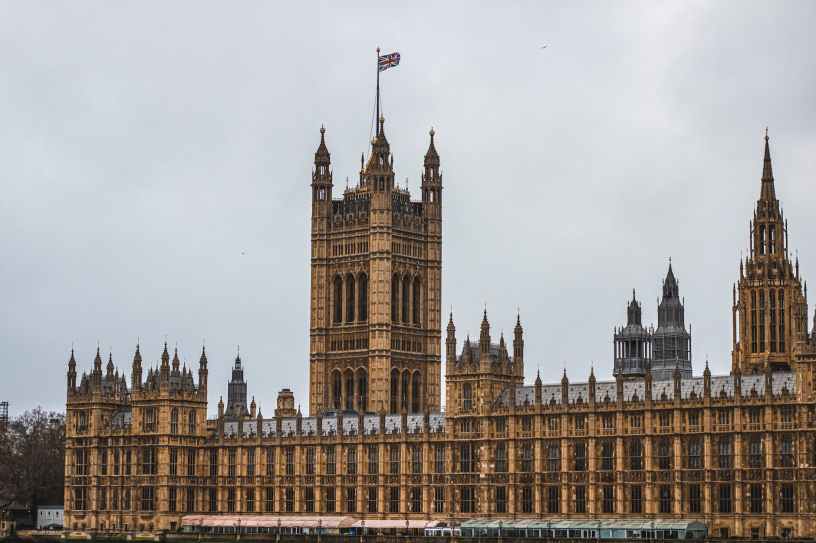
These opportunities and resources have been compiled by Dr Helen McCabe, and UK Parliament’s Knowledge Exchange Unit (KEU) to help you understand how to engage with Parliament as an arts and humanities researcher.
This is an exciting time in Parliament, as so many inquiries are getting started – and so many of them are directly calling for input from the arts and humanities. You don’t need to be an expert in every aspect of a topic to engage. For example, you only need to answer one question in a select committee call for evidence to make a useful submission. Also, you don’t need to have published an article or book on these issues for your evidence to be useful for Parliament: it might be part of your current PhD, or a research project that hasn’t quite finished; or – in some cases – something you have personal experience of as an arts and humanities researcher or practitioner.
For more on engaging with Parliament, take a look at the KEU’s webhub of information and resources for researchers.
Jump to:
- Please get in touch!
- Arts and the creative industries
- Development and area studies
- Education
- Geographers
- Historians
- Information and communications
- Media and cultural studies
- Language and literature studies
- Lawyers and legal scholars
- Philosophers
- Political theorists
- Politics, diplomacy and international relations
- ALL arts and humanities researchers
Please get in touch!
I would love to hear from anyone who does engage with any of the opportunities listed below, to learn more about your experiences. I’d also love to hear thoughts from the whole arts and humanities research community as to whether highlighting these opportunities is useful for researchers and knowledge mobilisers.
If you have any insights to share on any or all of the following questions, please send me an email at keu@parliament.uk:
- If you have any insights to share on any or all of the following questions, please send me an email at keu@parliament.uk:
- Would you find it helpful to receive regular updates highlighting opportunities for arts and humanities researchers to engage with Parliament?
- Did you submit evidence to any of these select committee inquiries, or POSTnotes? If so, was this because you first saw the opportunity here, or had you already noted it from a) the KEU roundup, or b) somewhere else?
- Were there questions I missed which would have been relevant to your research area and/or wider discipline? (This will really help me learn about the breadth and depth of arts and humanities research.)
- Did I miss your discipline, even though there were relevant questions? (And which were they?) (This will really help me learn about the whole breadth and depth of arts and humanities disciplines.)
- If you saw an opportunity here that was relevant to your research, but didn’t submit evidence, would you mind sharing why not? (This will help me identify barriers to arts and humanities researchers engaging in this way with Parliament.)
You can also fill in this form to tell me a little about your work. I will use this to find experts to recommend to parliamentary colleagues and share updates on my work to support arts and humanities knowledge exchange in parliament.
This is not an exhaustive list: please do take a look at calls for evidence related to your research and see what the committee is asking. You can find a full list of inquiries here. Apologies to everyone from disciplines I didn’t specifically mention in this highlight – I couldn’t see an opportunity to engage. Please do let me know if I missed something! I will also keep looking for opportunities across the whole of the arts and humanities for people to engage with parliament – via select committees and POSTnotes, or something else! Watch this space!
Why should I engage?
Submitting evidence to a select committee can lead to further engagement, such as an invite to give oral evidence. Your submission will be published on the Committee webpage. Your insights may strengthen the Committee’s scrutiny and inform the Committee’s conclusions or recommendations it makes to the Government.
POSTnotes are used by Members of the House of Commons and the House of Lords and UK Parliament staff to navigate complex research. Contributing to a POSTnote is a good way of feeding your expertise into the UK Parliament as part of a trusted, impartial publication. All contributors are acknowledged when the POSTnote is published.
More information
All select committee inquiries currently accepting evidence are found here. Find out more about contributing to a POSTnote as an expert. For queries about POST or POSTnotes contact POST.
Resources
- Find guidance on submitting evidence to select committees on the KEU’s ‘how to guides’ page.
- Watch the KEU’s 30 minute online training session “How to work with select committees”
- Find information on contributing to POST research as an expert here.
Arts and the creative industries
We couldn’t fit everything in the title, but this section is aimed at researchers and practitioners – and those working to support them – in music, fine art, dance, drama and theatre studies, visual arts, creative writing, design and/or the creative industries:
- The Soft Power: A Strategy for UK Success inquiry asks how the FCDO could engage with the media and private sector to improve soft power; about culture and media as UK soft power strengths; and funding and value-for-money of organisations such as the BBC World Service.
- The UK-EU Reset inquiry asks about easier access for UK touring artists in the EU.
- The Rip-Off Britain: Dynamic Pricing and Consumer Protection inquiry asks about reasons for offering dynamically-adjusted prices or different prices to different groups (including the example of student tickets for theatre shows) and the impact of dynamic pricing on business value creation and UK economic growth (which may have relevance for the creative sector).
Development and area studies
- The Soft Power: A Strategy for UK Success inquiry asks about the UK’s soft power in post-conflict reconstruction, and how the UK is perceived in different areas of the world, as well as FCDO and arms-length bodies’ contributions to UK soft power (e.g. British Council).
- The UK’s Future Relationship with the US inquiry asks about the extent to which the US is retreating from international development, and the implications of that for the UK.
Education
- The Further Education and Skills inquiry asks about the post-16 curriculum and assessment system; funding; workforce pressures; skills shortages; T-levels; quality of provision and facilities; apprenticeships; barriers to access; disparity in attainment; careers advice; and access to higher education.
- The Get Britain Working – Reforming Jobcentres inquiry asks how well Jobcentre Plus engages with external partners such as schools and further education, and the provision of careers services, including whether there are international examples the government could draw on for new jobs and careers advice.
- The Soft Power: A Strategy for UK Success inquiry asks about education as a UK soft power strength.
Geographers
- Transnational repression in the UK includes questions on the effect of existing support on individuals and their communities.
- The Further Education and Skills inquiry is interested in barriers to accessing further education, and disparity in attainment, including by gender, geographic area, and ethnicity.
- The Delivering 1.5 million new homes: Land Value Capture inquiry asks about new towns, “grey-field” sites, and planning law.
- The Energy, Grid and Grid Connections inquiry asks for views on barriers to delivering energy network infrastructure including those imposed by the planning and consenting system, and how this links to community consent; community incentives and/or obligations that might be accommodated in extending the grid network; Ofgem’s price controls; and incentivising energy production and consumption to move closer together.
- POST are undertaking research on Virtual Wards and are seeking contributions on equity of access.
Historians
- The Delivering 1.5 million new homes: Land Value Capture inquiry asks about the efficacy of current land value capture systems and possible alternatives.
- The Disinformation Diplomacy inquiry asks about the actual and perceived threats from disinformation.
- The UK’s Future Relationship with the US inquiry asks about the history of the “special relationship”.
Information and communications
- The Forced Labour in UK Supply Chains asks about information-gathering to respond to obligations under Section 54 of the Modern Slavery Act.
- The Get Britain Working – Reforming Jobcentres inquiry asks about opportunities for AI tools to improve Jobcentre Plus.
- The Disinformation Diplomacy inquiry asks about the actual and perceived threats from disinformation and the channels and technologies used to spread disinformation.
- POST are undertaking research on Virtual Wards and are seeking contributions on data security.
Media and cultural studies
- The Soft Power: A Strategy for UK Success inquiry asks how the FCDO could engage with the media and private sector to improve soft power; and about the value for money of arms-length organisations such as the BBC World Service.
- The UK’s Future Relationship with the US inquiry asks about cultural ties underpinning the “special relationship”.
- The Disinformation Diplomacy inquiry asks about the actual and perceived threats from disinformation and the channels and technologies used to spread disinformation.
Language and literature studies
- The Soft Power: A Strategy for UK Success inquiry asks how the UK soft power could be used to challenge the narratives of other major world powers.
Lawyers and legal scholars
- The Transnational repression in the UK inquiry includes questions on definitions; legislative response in the UK and internationally; specific UK law (and gaps in it); multi-lateral police and judicial cooperation mechanisms; and the UK’s relevant international obligations.
- The Soft Power: A Strategy for UK Success inquiry asks how soft power provides support for the rules-based international order.
- The Forced Labour in UK Supply Chains inquiry asks about the obligations created by the UK Modern Slavery Act; the efficacy of UK legislation; recent case law; international obligations and UK compliance; and comparison with US and EU law (and that of other states).
- The Delivering 1.5 million new homes: Land Value Capture inquiry asks about reform to planning law, and compatibility of new land value capture methods with human rights legislation regarding property rights.
- The UK-EU Reset inquiry asks whether a reset should take a legal form.
- The Energy, Grid and Grid Connections inquiry asks about relevant law and regulation.
- The Work of the County Court inquiry asks many questions about the work of county courts, and how that might be improved.
- The UK’s Future Relationship with the US inquiry asks about the likely impact of the new US administration on multilateral and international organisations, and the challenge this poses to the rule-based international order.
Philosophers
- The Get Britain Working – Reforming Jobcentres inquiry asks about opportunities for AI tools to improve Jobcentre Plus.
- POST are seeking contributions on Cultivated Meat and Virtual Wards
Political theorists
- The Transnational repression in the UK inquiry includes questions on definitions.
- The Soft Power: A Strategy for UK Success inquiry asks how soft power might be measured and understood, and what it’s object should be.
- The Delivering 1.5 million new homes: Land Value Capture inquiry asks about the efficacy of current land value capture systems and possible alternatives.
- The Disinformation Diplomacy inquiry asks about the actual and perceived threats from disinformation.
- POST are undertaking research on Virtual Wards and are seeking contributions on equity of access.
Politics, diplomacy and international relations
- The Transnational repression in the UK inquiry includes questions on multi-lateral organisations; diplomatic relations; and co-ordination between UK government departments and international counterparts.
- The Soft Power: A Strategy for UK Success inquiry asks about the UK’s soft power strengths in diplomacy, post-conflict reconstruction, and conflict resolution; the role of the FCDO in leading the UK’s soft-power approach; how soft power interacts with UK foreign policy; and how the UK might use its soft power to challenge the narratives of other major powers.
- The Disinformation Diplomacy inquiry asks about the perceived threat from disinformation campaigns, and the effectiveness of current response.
- The UK-EU Reset inquiry asks about how government can influence EU policy via bilateral and multilateral organisations; and priorities for a UK-EU security pact.
- The UK’s Future Relationship with the US inquiry asks about the meaning, benefits, challenges and current state of the “special relationship”; benefits and challenges of such a relationship; the impact of US scepticism about multilateral and international organisations, and the challenge this poses to the rule-based international order, and the United Nations; and defence and intelligence sharing.
ALL arts and humanities researchers
- The Further Education and Skills inquiry asks for input on the post-16 curriculum.
 Research and Innovation